







David Hartley MP
The British Founding Father of the United States of America
D
avid Hartley, Member of Parliament for Kingston upon Hull, occupies a distinctive place in the history of American independence. Though he served in the British Parliament during the American Revolutionary War, he was among the few who consistently opposed the conflict. At a time when calls for military force dominated political life, Hartley advocated for peace, reconciliation, and respect for the rights of the American colonies.
A Whig politician influenced by Enlightenment thought, Hartley argued that the colonists were entitled to the same liberties as British citizens. His speeches in Parliament echoed principles later reflected in the Declaration of Independence, including self-government, justice, and individual liberty. He maintained that war against the colonies was both unjust and damaging to Britain’s long-term interests.
Friendship and Transatlantic Influence
Hartley’s principled stance brought him into close contact with leading American figures, most notably Benjamin Franklin. Their friendship was grounded in shared intellectual and philosophical beliefs, and their correspondence reveals a relationship of genuine warmth and mutual respect. Franklin recognised in Hartley a rare ally within Britain—one who sought reconciliation rather than coercion.
His reputation extended further across the Atlantic. In 1776, Thomas Jefferson sent Hartley a draft of the Declaration of Independence for comment. Hartley responded with thoughtful suggestions, including proposals that the document address the abolition of slavery and clarify a future relationship with King George III once independence had been achieved. These recommendations were not adopted, but the exchange demonstrates the degree of trust and respect he commanded among the American leadership.
The Treaty of Paris, 1783
Hartley’s most significant contribution came at the conclusion of the war. He served as the principal British representative in the final stage of negotiations and was the sole British signatory to the Treaty of Paris, signed on 3 September 1783, alongside Benjamin Franklin, John Adams, and John Jay. The treaty was signed in Paris at the Hôtel d’York, 56 Rue Jacob, where Hartley acted on behalf of King George III and the British government. His signature formally recognised the independence of the United States and marked the culmination of his long advocacy for diplomacy over conflict. While earlier preliminary terms had been agreed in 1782 by other British negotiators, Hartley’s role was pivotal in concluding and formalising the peace. For this reason, he is sometimes described as a “British Founding Father” of the United States.
Legacy and Cultural Recognition
David Hartley’s legacy lies not in military achievement but in moral conviction, diplomacy, and intellectual exchange. He represents a strand of British political thought that recognised the legitimacy of American grievances and sought a just settlement at a moment of imperial crisis.
His life and family have recently entered popular culture through An Eye for an Eye (2024), a novel by Jeffrey Archer in the William Warwick series. Set in part at Bucklebury, the story draws on the history of the Hartley family and centres on a draft copy of the Declaration of Independence.
The 250th Anniversary of American Independence
The year 2026 marks the 250th anniversary of the Declaration of Independence. To commemorate this occasion, the Hartley family has commissioned a new portrait by the artist Andrew Gow depicting Benjamin Franklin, John Adams, John Jay and David Hartley at the signing of the Treaty of Paris. Inspired by Benjamin West’s well-known but unfinished painting of the negotiations, which depicts only the American delegation, this new work restores the British presence to the scene and will be unveiled in 2026. In parallel, filmmaker Kira Sarria has been commissioned to document Hartley’s historical role and the creation of the portrait.
A Figure of Conscience
David Hartley stands as a reminder that the founding of the United States was not solely an American endeavour, but a transatlantic moment shaped by ideas, relationships, and diplomacy. From Bucklebury to Paris, and from Parliament to the negotiating table, his life illustrates the enduring importance of principle, dialogue, and mutual respect in times of division.
Gallery
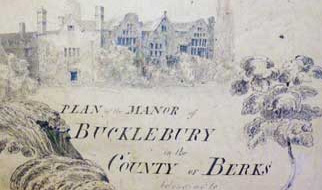
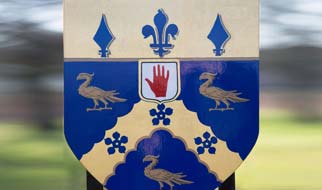
Cartouche
Original Bucklebury Cartouche dated 1794 to the Rev. Winchcombe Henry Howard Hartley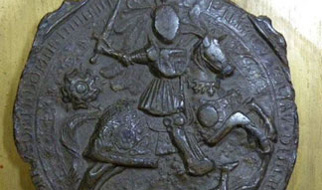
King Henry VIII Great Seal
The great sealof King Henry VIII used to bind historical documents related to Bucklebury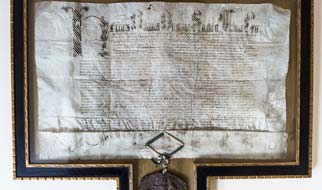
Grant of Bucklebury Manor
The grant of the manor dated 1540 featuring the seal of King Henry VIII.

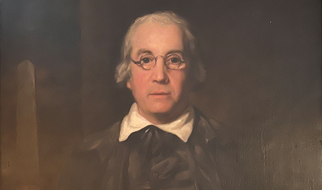
David Hartley MP
The Member of Parliament for Kingston upon Hull, David Hartley MP occupies a very important place in the story of American independence...
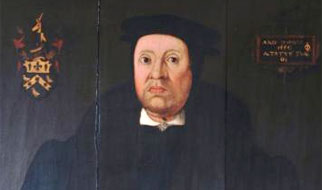
Bucklebury History
Over the last 900 years there have been two owners of the Bucklebury Estate; Reading Abbey and the Winchcombe Family...
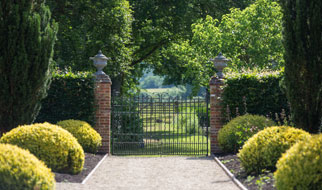
The Estate
The Bucklebury Estate is the oldest landed Estate in Berkshire and one of the oldest Estate’s in the country...
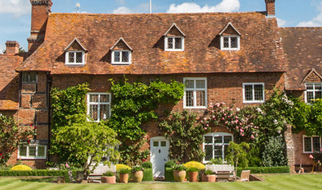
Bucklebury House
King Henry I originally bestowed the Manor of Bucklebury on the monks of Reading Abbey, who created fishponds in the grounds...
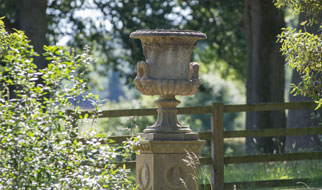
The Gardens
The Benedictine monks of Reading Abbey set out the first gardens at Bucklebury in the twelfth century, creating an elaborate system of seven fishponds...

Bucklebury Common
Bucklebury Common is one of the largest Commons in Southern England. It is privately owned by the Bucklebury Estate...